|
| Aerial view of the Tunguska blast site nowadays. |
Death from the skies!
This is what seems to make tabloid headlines every few months. NASA or some other space agency (though it’s almost always NASA) supposedly says that there’s a “killer asteroid” headed our way in X years. When it hits, we’re all dead! Just like the dinosaurs before us, we will be wiped out by a giant space rock and there’s nothing we can do about it.
These claims are, of course, clickbait. No one from NASA has said that there is a dinosaur killing sized chunk of space rock that will crash into our happy little planet and make us all enter the Forever Box. Alas, we can’t let facts get in the way of some good clicks for sensationalistic journalism.
Still, that doesn’t mean that our rocky friends from space haven’t hit us before. Every year, a plethora of meteors strike Earth, but they’re either too small to do any damage or burn up as they enter our atmosphere. In other instances, they do land, but are unnoticeable or make for a good viral video because they light up the sky.
In some rare instances, they actually do some damage and kill a lot of life. One good example of this is 99942 Apophis, a 1,080 foot wide asteroid that caused a pretty big scare when it was said it may hit Earth in 2036. An asteroid the size of Apophis typically strikes Earth once every 80,000 years. It wouldn’t cause an extinction level event mind you, but folks on YouTube and tabloids would have you believe otherwise since they made it out to be a doomsday rock from the high heavens.
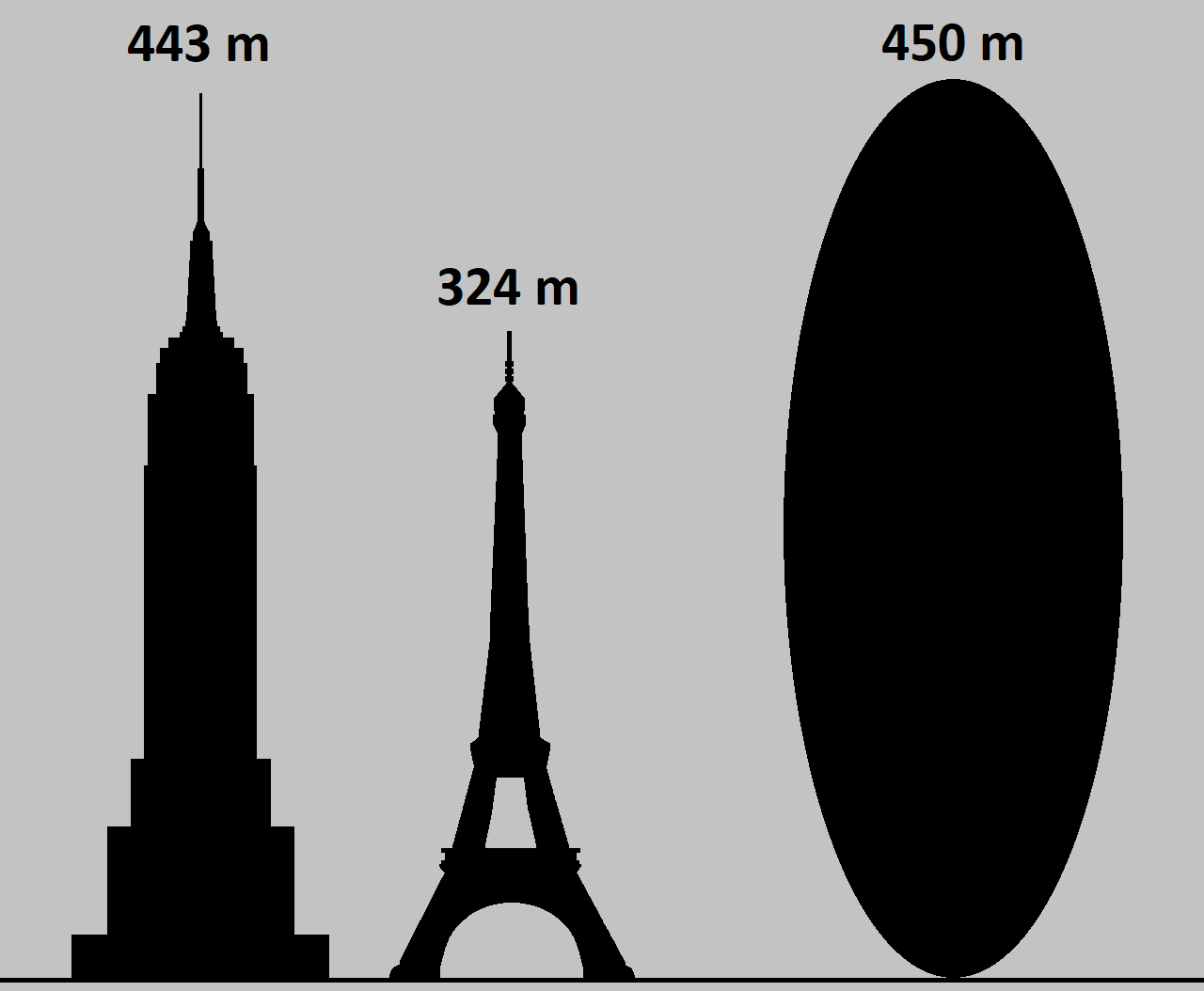 |
| A comparison of the Empire State Building and Eiffel Tower to 99942 Apophis. |
Nowadays, they say that Apophis has a 1 in 150,000 chance of hitting Earth on April 12, 2068. These chances are subject to change and given that’s not for another 48 years (rounded) as of the time of this writing, one can bet that it’s likely we’ll either be able to send Apophis to Mars, Venus, or just straight out of the Solar System. Or, even more likely, Apophis will whoosh by our planet and go on its merry way.
Though what if it didn’t? What if it—or another still sizable asteroid—were to hit us? What would the damage be like?
As I said before, there have been asteroids that have hit Earth. There have also been meteors and comets. The thing is: it’s very rare, but when it happens, people definitely know. The devastation can be tremendous and the loss of life can be unbelievable…
Unless it lands somewhere remote, where the loss of life is minimal and nobody really notices it. This is the case of today’s story, which has become known as the Tunguska Event. While many have come to accept the theory that what caused this incredible event was a comet, some remain unconvinced. As such, we’re going to take a look and see if we can discover the truth behind it all. So let’s dive in!





.jpg/revision/latest/scale-to-width-down/340?cb=20140830152859)